
A different reason to look at Forest City
If your group enjoys buildings and gardens, a Forest City visit can begin with a small visual question: where does the planting sit? At ground level, along a balcony, on a façade or on a roof? That is a different outing from booking golf, choosing a resort room or looking for a water-play activity.
This is a source-led way to look, not our claim of a guided architecture tour. Use a permitted viewpoint and an actual venue arrangement. The interest is in noticing relationships between plants, building edges and daily use—not in collecting a checklist of places you have not confirmed you may enter.
Read the old photograph in three layers
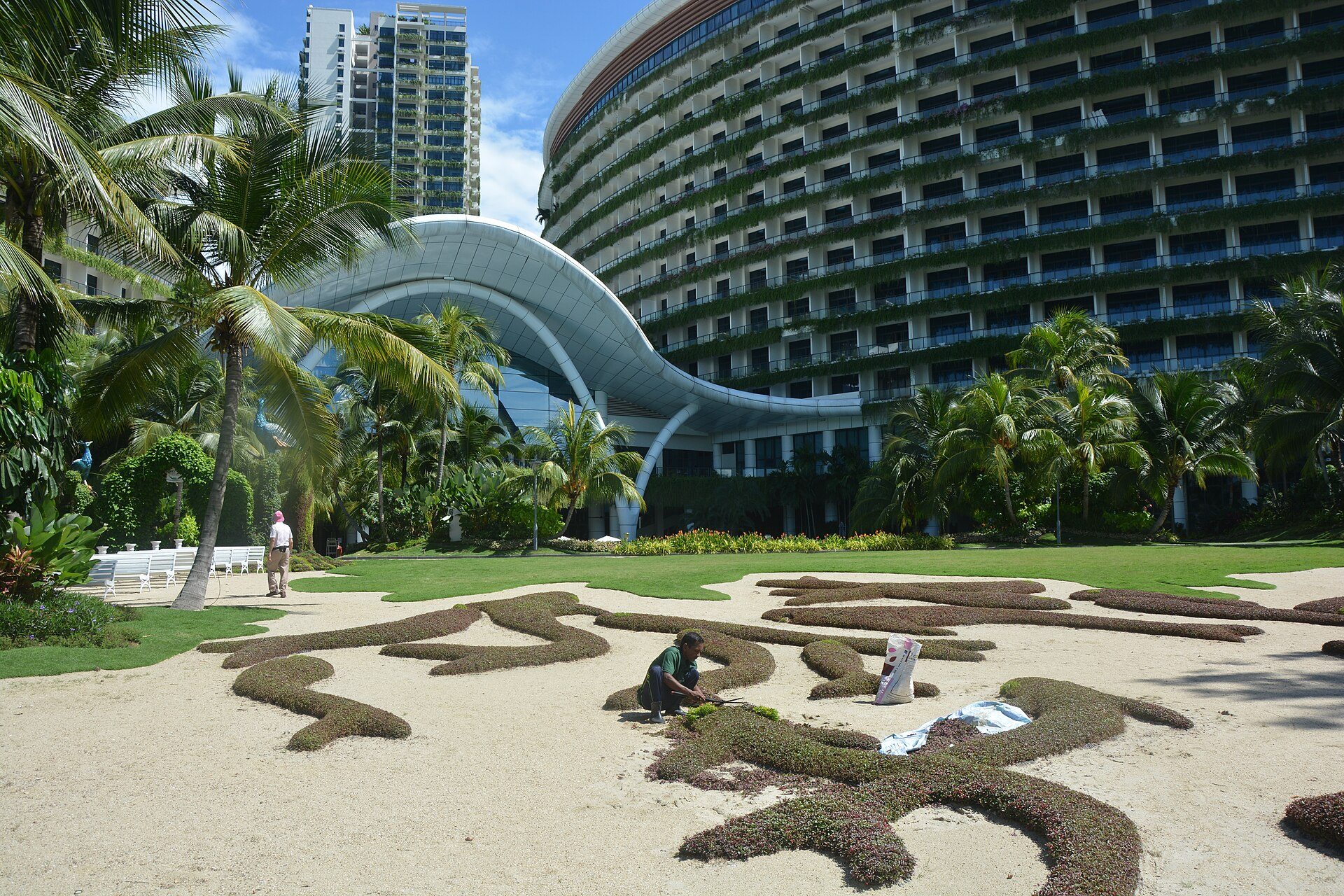
Our June2019 photograph shows the Marina Hotel exterior with planted horizontal edges, a garden in front and taller buildings behind. First follow one repeated line across the façade. Then compare it with the palm trees and lower planting. Finally notice how the building frames the open garden. These are observations of this particular historical image, not a survey of the whole development today.
For a family discussion, ask each person to choose one detail and explain it in their own words. Someone may notice repetition, another the curved roof, another the work needed to maintain a planted space. You do not need to identify a plant species, measure a temperature benefit or invent an architectural award to find the scene interesting.
Vertical greenery, a sky garden and a roof garden are not synonyms
Forest City’s developer used these different terms in its19September2019 greenery account. They help separate planting on building faces from planted outdoor areas at higher levels. The historical description is useful vocabulary; it does not tell a visitor which roof, terrace or residential garden is currently open.
A green edge visible from outside may belong to a hotel, residence or managed space. Do not turn a promotional master-plan image into a walking route between roofs. If an elevated garden is essential to the outing, ask the relevant property for the exact current visitor arrangement rather than assuming that the word garden makes it public.
A green view is not a sustainability score
It is reasonable to appreciate a planted façade without claiming that one photograph proves a whole city is environmentally successful. In a2016 essay, Sasaki discussed the difficult ecological context of coastal reclamation and its design response at Forest City. A designer’s aims are not the same evidence as measured outcomes in2026.
Keep your own description precise: a planted edge in this image, a pattern you can see, a question you want to ask. Avoid converting appearance into promises of cleaner air, cooler rooms, completed transport networks or restored habitats. This article offers an architecture-reading idea, not a property recommendation, environmental certification or investment assessment.
Who is likely to enjoy this kind of stop?
It suits companions who enjoy looking slowly, taking a few context photographs and discussing design. It is a weaker choice if the day depends on guaranteed indoor entertainment, access to a particular roof or a fully booked activity. Agree on that preference before choosing a venue, so one person is not expecting a resort programme while another only wants to look at a façade.
Photography should respect people and occupied buildings. Remain where visitors are permitted, follow current signs and do not seek entry to private areas to reproduce an old camera angle. A useful photograph can include the garden and building together, rather than cropping out the surroundings and implying a private balcony is a public attraction.
Turn the interest into one confirmed destination
Choose the actual permitted venue or meeting point before discussing Singapore-to-Forest-City road transport with our existing route team. A general development name does not identify a particular entrance, and a car booking does not grant hotel, residential or rooftop access. Any extra stop or waiting remains subject to an agreed road arrangement.
Information reviewed31October2026. The greenery account is dated2019 and was available in search-visible text during this check; direct retrieval timed out. The designer’s essay is dated2016, and the photograph2019. None is presented as a current access notice. Our separate coast, hotel and golf articles answer their own activity questions; this guide keeps its focus on how to look at green architecture.